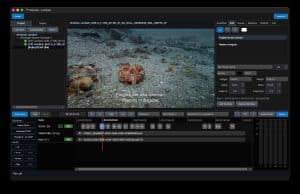
More than a DCP authoring tool, DaCaPo manages the DCP throughout its lifecycle — from creation and versioning to accessibility, encryption, QC and delivery
9 September 2026, Gothenburg, Sweden – Launching in time for IBC2026, DaCaPo is a brand new professional DCP application designed to transform DCP authoring and the wider DCP workflow into a single environment. Instead of accepting DCP creation as the final step in post-production, DaCaPo has been built around the DCP itself as the central focus, as an ongoing project that can continue through versioning, accessibility, encryption, quality control and delivery.
DCP functionality integrated into post-production applications typically focuses on creating the DCP as the final deliverable. DaCaPo takes a different approach – the DCP itself becomes an ongoing project. Existing DCPs can be brought back into the workflow and developed into new versions, allowing picture, audio, subtitles and accessibility elements to be managed without having to return to the original post-production project.
DaCaPo allows users to create new Original Versions (OVs) or load existing DCPs for further work. Picture, audio, subtitles and accessibility elements can be added and modified as required. New Original Versions or Version Files (VFs) can then be exported directly from the project, with VFs reusing existing OV assets wherever possible. The application brings DCP authoring, playback, encryption, KDM and DKDM generation, verification and QC reporting together in the same environment.
Accessibility is integrated into the DaCaPo workflow, with support for Open Captions (OCAP), Closed Captions (CCAP), Hearing Impaired (HI) audio and Visually Impaired Narrative (VI-N) audio. DaCaPo also supports SMPTE RDD 52 Sign Language, including both authoring and playback.
DaCaPo is designed to fit into existing post-production workflows rather than replace the editing, grading or sound systems used to create the source material. Media exported from applications such as DaVinci Resolve, Premiere Pro and Final Cut Pro can be brought into DaCaPo using standard video, image-sequence, audio and subtitle formats, with DaCaPo handling the DCP-specific stages of the workflow. Existing DCPs created in other applications can also be brought directly into the same workflow.
For example, a DaCaPo project can bring together multiple DCPs, versions and assets and allows IOP, SMPTE and RDD 52 workflows to be managed within the same project. DaCaPo also handles encrypted DCPs and Dolby Atmos content as part of its versioning and export workflows.
DaCaPo is designed for post-production companies, studios, distributors and film festivals that need greater control over DCP creation and delivery. By bringing authoring, versioning and QC into the same workflow, DaCaPo helps users identify potential issues before a DCP reaches the cinema.
A niche specialist product, DaCaPo has already been successfully tested by post-production professionals and filmmakers around the globe, with cinematographer Michael Tebinka noting, “DaCaPo provides me with exactly the overview and tools I need when working with DCP authoring prior to sending our projects off to film festivals and screenings. Adding this important layer of confidence is worth everything and eliminates surprises.”
Colourist Tal from Talent-Post in Los Angeles adds, “DaCaPo is, by far, my favourite DCP tool.”
Following discussions over the years about the idea of a standalone DCP application – Nikolai Waldman and Christer Engström – who have both worked in the film and post-production industry since the early 1990s – put their heads together to design DaCaPo.
As creator of the CuteDCP plugins for Premiere Pro and After Effects, Christer brought his extensive DCP expertise to the project, while Nikolai contributed with his valuable experience as a colourist and editor, with a particular focus on simplifying workflows to be more user-friendly. Together, they designed and developed DaCaPo from the ground up.
“Creating DCPs for my clients over the years as a colourist and editor has given me a clear understanding of where I believe existing workflows can be improved,” says Nikolai Waldman, “This area formed a major foundation for DaCaPo – not simply another way to create a DCP, but to create a tool for managing the work that happens around it. We expect DaCaPo to appeal to post-production professionals looking for an affordable, efficient DCP workflow tool that can save both time and reduce complexity. This is only the beginning for DaCaPo.”
Christer Engström adds, “Our goal with DaCaPo has been to make professional DCP tools available in a standalone application, while creating a workflow that makes working with DCPs more straightforward and efficient. After years of serious deliberations about how the application should materialise, we are very excited to finally be at this stage where we can now make DaCaPo publicly available.”
(A DCP (Digital Cinema Package) is the standard delivery format used to distribute and present films in digital cinemas. It brings together the picture, audio, subtitles and other elements required for theatrical presentation in a standardized package that can be delivered to and played by digital cinema systems.)
For further information about DaCaPo, including features, specifications and pricing, visit the dedicated website here: https://dacapo.pro/.
DaCaPo tutorials and demonstrations are available on the DaCaPo YouTube channel here: https://www.youtube.com/channel/UC-K0UVBKNDS0WtljrTogvpw
About DaCaPo – DaCaPo is a professional DCP authoring and workflow application developed in Sweden by post-production specialists and software developers Nikolai Waldman and Christer Engström. Built by post-production professionals for post-production professionals, DaCaPo brings DCP creation, versioning, playback, accessibility, encryption, verification and delivery into a single application.
Waldman and Engström have both worked in the film and post-production industry since the early 1990s. Waldman’s experience spans production, editing, colour grading, post-production technology and operations, working with international clients and productions throughout his career. Alongside his work as a professional colourist and editor, he has extensive experience in post-production workflow design, training and software development.
Engström’s background includes editing, VFX and software development, with specialist experience in DCP mastering and delivery. He is the creator of CuteDCP, a DCP authoring solution for Premiere Pro and After Effects and has supplied DCPs to film festivals and organisations around the world. His DCP work has included many years as a principal DCP supplier to the Gothenburg Film Festival, as well as deliveries for the Swedish Institute, which distributes Swedish films internationally. Together, Waldman and Engström combine hands-on post-production experience, specialist DCP knowledge and software development with many years of real-world theatrical delivery. https://dacapo.pro/
About Waldman Media – Waldman Media is a Swedish post-production, software and training company and the distributor of DaCaPo. Founder Nikolai Waldman is a post-production specialist, professional colourist and software developer with experience spanning feature films, commercials, post-production supervision, workflow design and technology consultancy. Waldman is a certified iColorist and Blackmagic Design trainer, a Full Member of the Colorist Society International and Dolby Vision certified. Waldman Media provides professional training in DaVinci Resolve, colour grading, editing and DIT workflows, alongside post-production consultancy and software development. Training schedules, articles and tutorials are available at https://niwa.nu and https://waldmanmedia.com